What is a UGC creator? Role, pay, and how to start
A UGC creator makes content that looks like a real customer filming a product, then sells that content to the brand. The brand uses it in ads, on its product pages, and across social. The creator does not need a big following. They get paid for the footage, not for the reach.
UGC stands for user-generated content. The term used to mean unpaid reviews and posts from actual buyers. Now it also describes a paid role: people who produce that authentic, customer-style content on demand. This guide covers what a UGC creator does, how the job differs from being an influencer, the types of UGC, how much creators earn, and how to start.
What is a UGC creator?
A UGC creator is a paid content producer who films casual, real-looking videos and photos for brands. Think of the phone-shot clip where someone unboxes a skincare set on their bathroom counter, or talks to the camera about a supplement while sitting in their car. That style is the product. Brands buy it because it does not look like a polished commercial, and shoppers trust it more.
The key difference from a traditional creator: a UGC creator usually does not post the content on their own account. They hand the files to the brand. The brand then runs the footage as paid ads or organic posts from the brand's own channels.
This matters because it removes the biggest barrier to creator work. You are selling a deliverable, like a freelance video editor or a copywriter does. Your audience size is mostly irrelevant.
What does a UGC creator do?
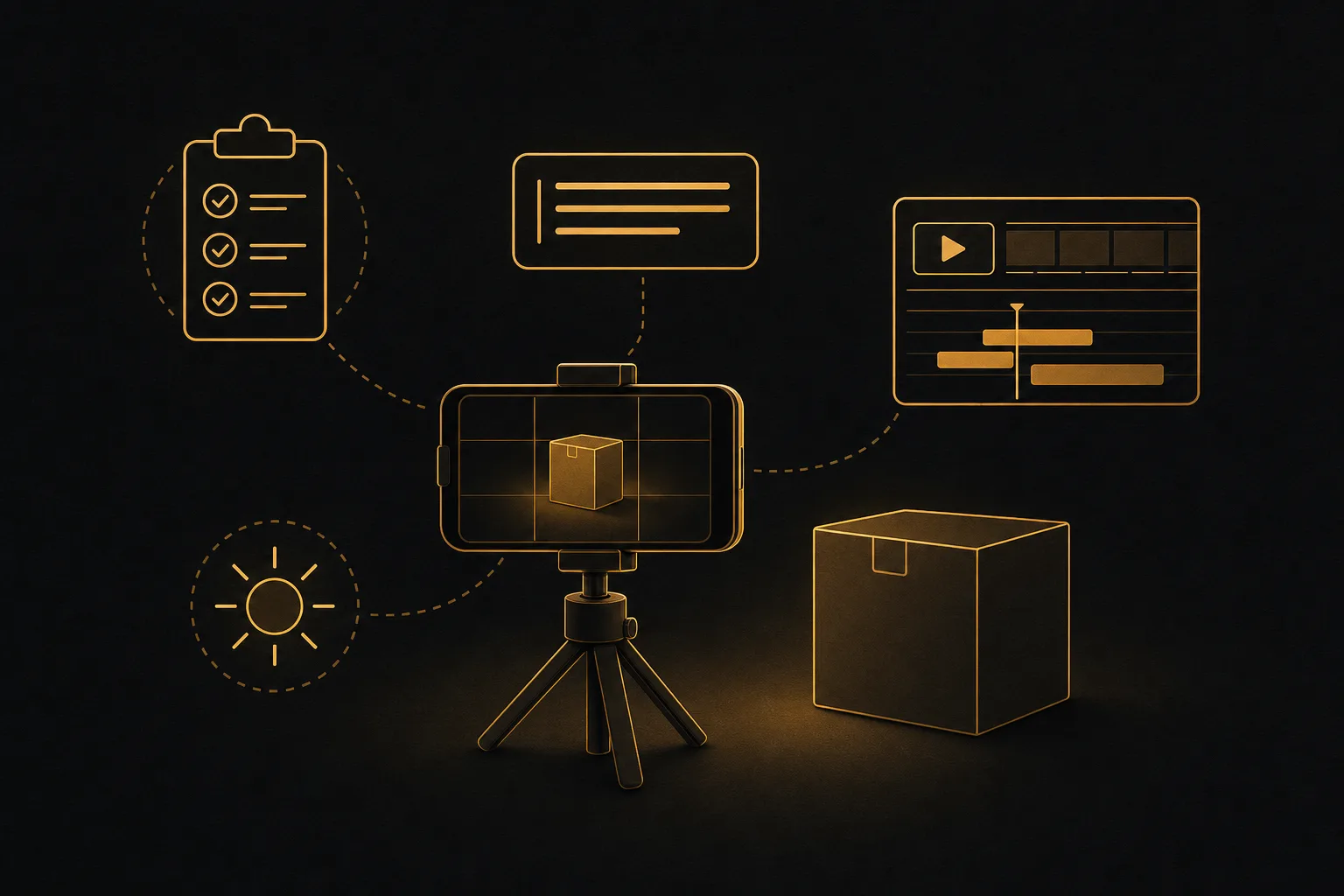
The job is part filming, part marketing, part client work. A typical project runs like this:
- Receive a brief. The brand sends the product, a list of talking points, and the format they want (a hook, a demo, a testimonial).
- Write a short script or hook. Most UGC videos open with a line that stops the scroll in the first two seconds.
- Film the content. Usually on a phone, in natural light, in a real setting like a kitchen or desk.
- Edit it. Add captions, cut dead air, layer in trending audio, and trim to the platform length (often 15 to 60 seconds).
- Deliver and revise. Send the files, then make tweaks the brand requests.
Good creators also learn what makes an ad convert: a strong hook, a clear problem, the product as the fix, and a reason to act now. That marketing instinct is what separates a $50 video from a $400 one.
UGC creator vs influencer: the real difference
People mix these up constantly. They are different jobs with different value to a brand.
| Factor | UGC creator | Influencer |
|---|---|---|
| What you sell | The content files | Access to your audience |
| Followers needed | Few or none | The whole point |
| Where it posts | The brand's channels and ads | Your own channels |
| You get paid for | Deliverables | Reach and engagement |
| Your face shown? | Often, but not always | Almost always, as you |
An influencer says, "I love this product, here is my link." A UGC creator makes content the brand presents as its own. You can be both, but you do not have to be. Many full-time UGC creators have under a thousand followers and never show their content on a personal page.
Types of UGC
Not all UGC looks the same. Brands ask for different formats depending on where the content will run.
- Testimonial videos. You talk to the camera about a result the product gave you. Builds trust fast.
- Unboxing and first impressions. The package, the reveal, the reaction. Strong for product launches.
- Tutorials and how-to. You show the product in use, step by step. Great for anything with a learning curve.
- Problem-solution skits. A short scene where a problem appears and the product fixes it. Common in paid ads.
- Photo UGC. Lifestyle shots of the product in a real setting, used on product pages and feeds.
- Voiceover and faceless UGC. B-roll of the product with a voiceover. You never appear, which suits creators who do not want to be on camera.
How much do UGC creators make?

Pay is per deliverable, and the range is wide. It depends on your niche, your editing quality, and how much your content actually sells.
In the United States, a single UGC video commonly pays in the low hundreds of dollars, often somewhere between $150 and $500. Experienced creators with proven ad results charge more, sometimes $800 or higher for a video plus usage rights. Photo packages and add-ons like extra hooks, raw footage, or whitelisting (letting the brand run ads from your handle) raise the total.
A realistic monthly income depends on volume:
- Beginner: a few hundred dollars a month while you build a portfolio and your first repeat clients.
- Intermediate: $1,000 to $3,000 a month with steady clients and a consistent rate.
- Full-time and established: $4,000 and up, often by selling packages, raising rates, and charging for usage rights.
The big lever is usage rights and ad performance. A creator whose video keeps a brand's cost-per-acquisition low gets re-hired and can name their price. The footage is making the brand money, so the rate follows.
How to become a UGC creator
You do not need a degree, a studio, or a follower count. You need a phone, a portfolio, and a way to reach brands. Here is the path.
- Pick a niche. Beauty, supplements, home, tech, pets, apps. Brands hire faster when your sample work matches their category.
- Build a portfolio of spec content. Make 3 to 5 sample videos for products you already own. Treat them like real client work: strong hook, clear demo, captions, clean edit. This is what gets you hired, not your bio.
- Set up a simple profile. A TikTok or Instagram dedicated to your UGC work, plus a portfolio page or PDF, is enough to start.
- Reach out to brands. Email small and mid-size brands directly, pitch on creator marketplaces, and watch for brands already running ads (they have budget and they buy content).
- Set your rates and deliverables. Decide what one video costs, what revisions you include, and what usage rights cost extra. Put it in writing before you shoot.
- Deliver, then ask for the next one. Repeat clients are the whole business. One happy brand can become a monthly retainer.
The skills that matter most: a feel for hooks, basic mobile filming and lighting, fast editing, and reliable communication. You can learn all of them with free tutorials and reps.
How brands use UGC

Brands buy UGC because it converts. Shoppers trust content that looks like a peer, not a polished ad. Brands plug UGC into:
- Paid social ads on TikTok, Instagram, and Facebook, where native-looking video beats studio commercials.
- Product pages, where a short demo video lifts conversion.
- Organic social, posted from the brand's own account to keep the feed fresh.
- Email and retargeting, where a familiar face re-warms a shopper.
The catch for brands: they need a lot of it. Ad platforms reward fresh creative, so a single video burns out fast. A brand running paid ads might need dozens of variations a month to keep testing hooks, angles, and formats. Hiring enough human creators for that volume is slow and expensive.
Producing UGC-style video at scale with Vuela
This volume problem is where AI tools fit. Vuela lets brands and creators generate UGC-style ads with AI presenters straight from a product image or a URL. You describe the angle, pick a presenter, and get a talking, customer-style video without booking a shoot.
That makes ad testing practical. Instead of one video, you can spin up many variations, different hooks, different presenters, different scripts, and run them to see which one sells. Vuela also includes a viral video cloner to rebuild a winning format with your own product, automatic translation and dubbing into many languages with a natural matching voice, and a tool that turns long videos into vertical shorts. Plans are flat-rate from $9 a month.
For human UGC creators, the same tools speed up your own output: generate b-roll, add voiceover, translate a winning video for a new market, or test more hooks per client. AI does not replace the creator who understands what makes an ad work. It removes the slow parts so you can deliver more.
Frequently asked questions
How much do UGC creators make?
Pay is per video, not per post. In the United States a single UGC video commonly runs from about $150 to $500, and experienced creators with strong ad results charge more, often $800 or higher with usage rights. Monthly income ranges from a few hundred dollars as a beginner to several thousand once you have steady clients and raise your rates.
Do you need followers to be a UGC creator?
No. This is the main reason people choose UGC over influencing. You sell the content files to the brand, and the brand posts them on its own channels. Your follower count is mostly irrelevant. A strong portfolio of sample videos matters far more than your audience size.
How do I start as a UGC creator with no experience?
Pick a niche, then film 3 to 5 sample videos for products you already own and edit them like real client work. Put them in a simple portfolio, set up a profile dedicated to your UGC, and start pitching small and mid-size brands directly or on creator marketplaces. You can shoot everything on a phone.
What is the difference between a UGC creator and an influencer?
An influencer sells access to their audience and posts on their own page. A UGC creator sells content the brand uses as its own, usually on the brand's channels and in paid ads. You can do both, but a UGC creator does not need a following.
What equipment do UGC creators need?
A modern smartphone, decent natural or ring light, a tripod, and an editing app cover the basics. Brands want the content to look authentic, not like a studio production, so expensive gear is not the point. Clear audio, good lighting, and a strong hook matter more.